

 Feb 01, 2025
 4 min read
How Life Begins: A Journey from Spark to Soul
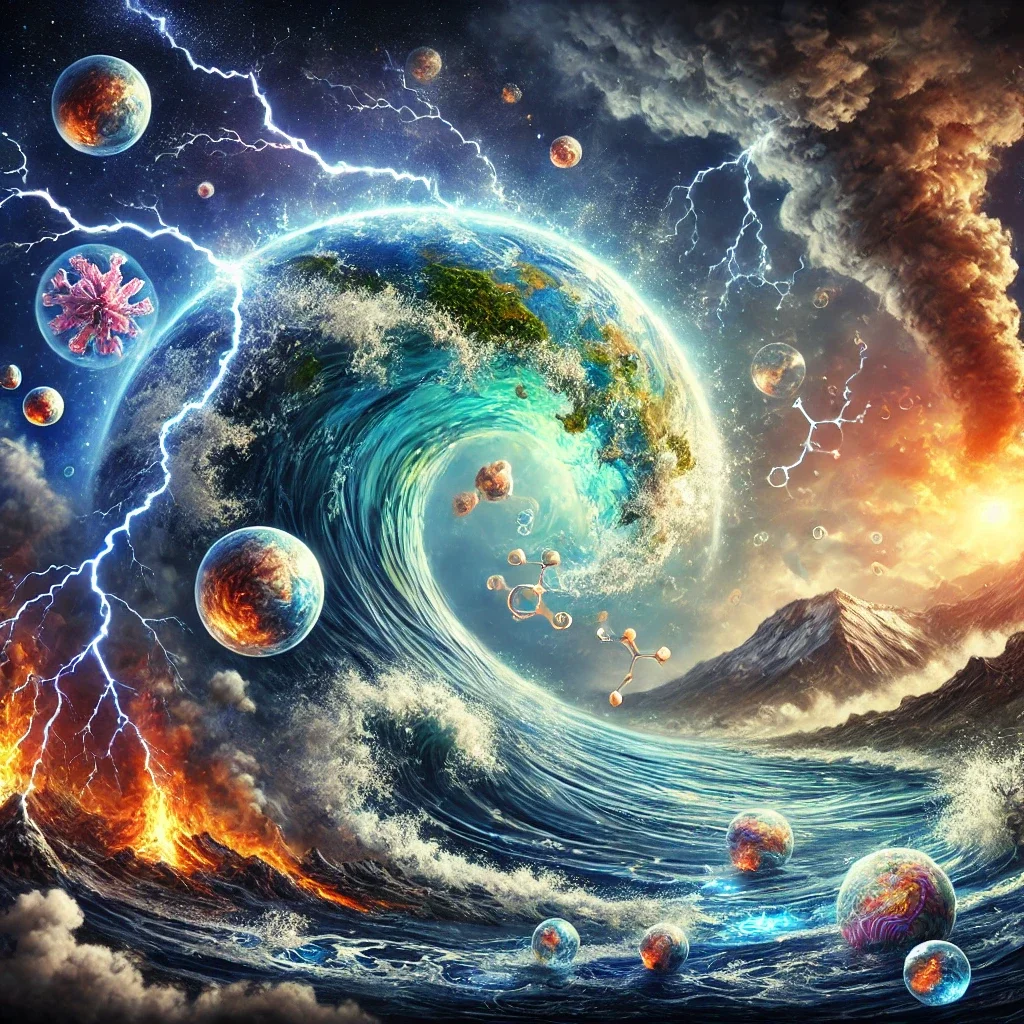
Life is one of the most fascinating mysteries of the universe. From the tiniest single-celled organism to the complex human body, the journey of life’s beginning is a rollercoaster of chemistry, biology, and a little bit of magic. Buckle up as we explore the origins of life—both from a scientific and an awe-inspiring perspective.
The Cosmic Prelude: Where Did Life Come From?
Before we even talk about sperm, eggs, and embryonic development, we need to step back—way back—to the origins of life itself. Scientists believe that life on Earth began around 3.5 to 4 billion years ago in the primordial soup, a swirling mix of water, minerals, and organic molecules.
Theories on Life’s Origins
- Abiogenesis (Chemical Evolution Theory)
- Life started when simple molecules like amino acids and nucleotides randomly combined in Earth’s early oceans, powered by lightning, volcanoes, and cosmic radiation. Experiments like the Miller-Urey experiment (1953) successfully created amino acids—life’s building blocks—by simulating these early Earth conditions.
- Panspermia: Cosmic Seeds
- Some scientists believe life didn't even start on Earth. Instead, microbes or organic molecules hitchhiked on asteroids or comets, planting the first seeds of biology when they crashed onto our planet.
- Hydrothermal Vents: Deep-Sea Birthplace
- The deep ocean floor, where volcanic vents spew mineral-rich water, might have been the cradle of life. These extreme environments are still home to bizarre creatures, suggesting that life may have begun in such harsh conditions.
From Chemistry to Biology: The Birth of a Living Cell
Once organic molecules formed, they began to self-organize into primitive cells. Scientists believe that RNA (ribonucleic acid) played a major role because it can both store genetic information and catalyze reactions. Eventually, these molecules were enclosed in lipid membranes, forming the first protocells—tiny, lifelike structures capable of basic metabolism.
Fast forward a few billion years, and evolution turned these protocells into bacteria, plants, animals, and eventually, us. But how does life begin at the individual level?
How Human Life Begins: The Sexy Side of Science
Now, let’s dive into something spicier—how you began. It all starts with a thrilling biological event: fertilization.
1. The Great Sperm Race
Each human male, during a single ejaculation, releases 100 to 300 million sperm into the vagina. But only a few hundred lucky ones make it to the fallopian tubes, where the egg waits like a queen at the top of a deadly obstacle course.
Fun Fact: Sperm can live inside the female body for up to 5 days!
2. The Egg’s Grand Entrance
Every month, the ovaries release a single egg (sometimes more—hello, twins!). This egg is surrounded by a protective layer called the zona pellucida, which sperm must break through to fertilize it.
3. The Moment of Truth: Fertilization
When one victorious sperm penetrates the egg, an electrical reaction blocks other sperm from entering. The sperm’s nucleus fuses with the egg’s nucleus, forming a zygote—the first cell of a new human life.
At this point, congratulations are in order. You’ve officially begun your journey!
From One Cell to a Whole Human: The Wild Ride of Embryonic Development
Week 1: The Zygote’s Road Trip
The zygote rapidly divides into multiple cells while traveling down the fallopian tube. By the time it reaches the uterus, it has become a blastocyst—a tiny, hollow ball of cells ready to implant into the uterine wall.
Week 2-8: The Embryonic Stage
- The blastocyst transforms into an embryo and starts forming key structures like the brain, heart, and spine.
- By week 4, the heart begins to beat—a defining moment in life’s journey.
- The embryo grows a tail (which disappears later), proving our evolutionary link to other animals.
Week 9+: The Fetal Stage Begins
- The embryo is now a fetus and starts looking more human.
- Organs develop, limbs move, and the baby starts reacting to stimuli.
- By month 5-6, the fetus can hear sounds, including the mother’s voice.
The Miracle of Birth
After around 40 weeks, the fetus signals that it’s time to enter the world. Labor begins, contractions intensify, and soon, a new life emerges—screaming, wrinkled, but full of potential.
Conclusion: Life Is an Epic Journey
From cosmic dust to complex organisms, from a single sperm to a thinking, feeling human being, life’s beginning is nothing short of miraculous. Whether seen through the lens of science or spirituality, one thing is clear—life is a force to be reckoned with.
So, the next time you look in the mirror, remember: you’re a product of billions of years of evolution, a champion sperm, and a biological masterpiece.
References:
- Miller, S. L., & Urey, H. C. (1953). "A Production of Amino Acids Under Possible Primitive Earth Conditions." Science, 117(3046), 528-529.
- Woese, C. R. (1998). "The Universal Ancestor." Proceedings of the National Academy of Sciences, 95(12), 6854-6859.
- Marieb, E. N., & Hoehn, K. (2018). Human Anatomy & Physiology. Pearson.


Comments (0)
Leave a Reply
Log in to post a comment.