

 Jun 24, 2026
 5 min read
Low Blood Calcium (Hypocalcemia): Causes, Symptoms, Complications, and treatment
Hypocalcemia: Causes, Symptoms, Treatment, and Prevention
What Is Hypocalcemia?
Hypocalcemia is a condition that occurs when the amount of calcium in the blood is lower than normal.
Calcium is one of the most important minerals in the human body.While many people think of calcium mainly in relation to strong bones and teeth, it also plays a major role in muscle movement, nerve function, heart activity, and blood clotting.
When calcium levels drop too low, the body might not be able to perform these important functions properly.
This can lead to a variety of symptoms that can affect daily life and overall health.
Why Is Calcium Important?
About 99% of the body's calcium is stored in the bones and teeth, giving them strength and structure.
The remaining 1% is found in the blood and soft tissues, where it helps with:
- Supporting muscle movements
- Maintaining a regular heart rhythm
- Helping nerves communicate
- Assisting in blood clotting
- Regulating hormone release
- Keeping bones strong and healthy
Since calcium is involved in many key functions in the body, even a slight decrease in blood calcium levels can lead to noticeable symptoms.
Causes of Hypocalcemia
Hypocalcemia can occur for several reasons.
Some causes are temporary, while others may need long-term management.
1. Vitamin D Deficiency
Vitamin D helps the body absorb calcium from food.
Without enough vitamin D, the body cannot absorb enough calcium, which can lead to low blood calcium levels.
Common reasons for vitamin D deficiency include:
- - Limited exposure to sunlight
- - Poor intake of calcium-rich foods
- - Certain digestive disorders
- - Kidney disease
2. Parathyroid Disorders
The parathyroid glands play a role in controlling calcium levels.
If these glands do not produce enough parathyroid hormone (PTH), it can result in low calcium level.
3. Kidney Disease
The kidneys help maintain balance between calcium and vitamin D.
Chronic kidney disease can interfere with these processes and cause hypocalcemia.
4. Magnesium Deficiency
Magnesium is important for the normal function of parathyroid hormone.
A lack of magnesium can indirectly contribute to low calcium levels.
5. Certain Medications
Some medicines can affect how the body handles calcium, including:
- - Bisphosphonates
- - Certain chemotherapy drugs
- - Anticonvulsants
- - Some antibiotics
6. Pancreatitis
Severe inflammation of the pancreas can cause a significant drop in calcium levels.
7. Poor Nutrition
A diet that lacks calcium-rich foods may increase the risk of hypocalcemia, especially when combined with a deficiency in vitamin D.
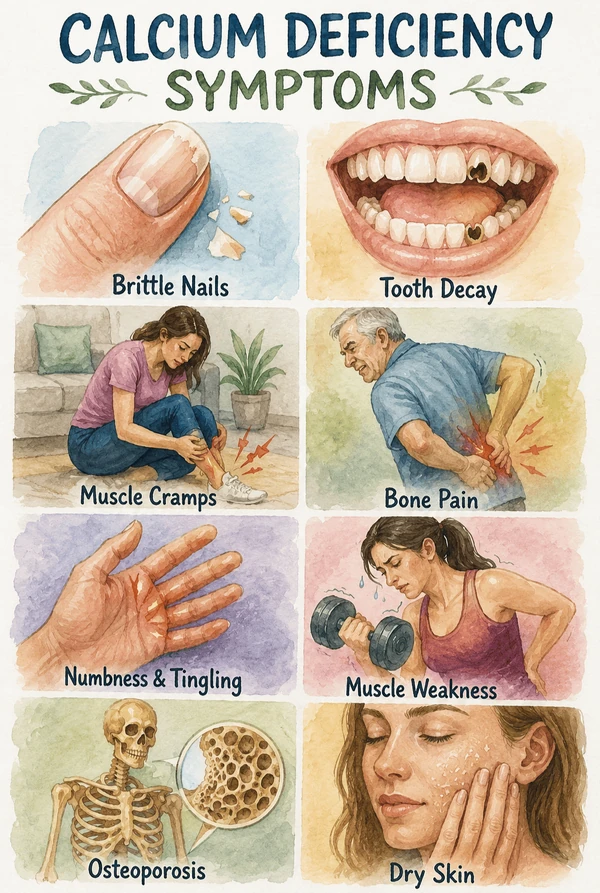
Symptoms of Hypocalcemia
The symptoms can vary from mild to severe, depending on how low the calcium level is and how quickly it drops.
Early Symptoms
- - Tingling or numbness in the fingers, toes, or around the mouth
- - Muscle cramps
- - Muscle twitching
- - Feeling tired
- - Weakness
Moderate Symptoms
- - Dry skin
- - Brittle nails
- - Hair loss
- - Difficulty focusing
- - Mood changes such as anxiety or irritability
Severe Symptoms
- - Strong muscle spasms
- - Seizures
- - Irregular heartbeats
- - Problems breathing due to muscle spasms
- - Confusion or changes in mental state
Severe hypocalcemia is a medical emergency and should be treated immediately.
Long-Term Effects of Untreated Hypocalcemia
If not treated, ongoing hypocalcemia can lead to serious problems, including:
Weak Bones and Osteoporosis
Low calcium levels can cause the body to take calcium from bones, making them weaker and more likely to break.
Dental Problems
Children may develop poorly formed teeth.
Adults may suffer from tooth decay and weak tooth enamel.
Neurological Issues
A prolonged calcium deficiency can affect the brain, leading to memory problems, depression, and other cognitive issues.
Heart Problems
Calcium is needed for the heart to contract properly.
A severe deficiency may raise the risk of abnormal heart rhythms.
---
How Is Hypocalcemia Diagnosed?
Doctors usually diagnose hypocalcemia using:
Blood Tests
These tests check for:
- Total calcium levels
- Ionized calcium levels
- Vitamin D levels
- Magnesium levels
- Parathyroid hormone levels
Electrocardiogram (ECG)
An ECG can help detect if low calcium levels are affecting the heart's rhythm.
Treatment for Hypocalcemia
The treatment depends on the underlying cause and the severity of the condition.
Calcium Supplements
For mild cases, oral calcium supplements may be used to bring calcium levels back to normal.
Vitamin D Supplementation
If vitamin D deficiency is causing hypocalcemia, vitamin D supplements may be prescribed.
Dietary Changes
Including more foods that are high in calcium can support maintaining healthy calcium levels in the body.
Examples of such foods are:
- Milk
- Yogurt
- Cheese
- Sardines
- Salmon with bones
- Tofu
- Almonds
- Kale
- Broccoli
Magnesium Replacement
If there is a lack of magnesium, taking magnesium supplements might be needed.
Intravenous Calcium
In serious situations, calcium can be administered directly into a vein in a hospital to quickly correct low calcium levels.
Some great sources of calcium in the diet include:
- Dairy products like milk, yogurt, and cheese
- Leafy green vegetables
- Fortified cereals
- Fortified plant-based milk
- Nuts and seeds
- Fish that have edible bones
- Beans and legumes
Some medications could actually interact with calcium supplements , these medicines are:
- Beta-Blockers such as Atenolol
- Antacids that contains Aluminium
- Cholesterol lowering bile acid sequestrant like colestipol
- Estrogen medication
- Digoxin
- Diuretics such as Furosemide and hydrochlorothiazide
- Some antibiotics like fluoroquinolones and tetracycline
If diet and oral supplements doesn't quite do the trick for low calcium, a doctor might suggest scheduled calcium injections instead. Most people start noticing an improvement within a few weeks, though anyone dealing with a highly severe deficiency will need follow-up checkups every one to three months to monitor progress.
Can Hypocalcemia Be Prevented?
In many cases, yes.
Prevention involves:
- Eating a balanced diet that includes enough calcium
- Getting sufficient vitamin D through sunlight and food
- Exercising on a regular basis
- Limiting the amount of alcohol consumed
- Avoiding smoking
- Managing any existing medical conditions
While it's important to know your daily calcium goals, more isn't always better. To keep your health in check, it is best to stay under the recommended daily maximums based on your age:
- Ages 19 to 50: Cap your intake at 2,500 mg per day.
- Ages 51 and older: Lower your daily limit to 2,000 mg.
People who are at a higher risk, such as older adults, individuals with kidney disease, and those with a lack of vitamin D, should have routine medical check-ups.
Overview
Hypocalcemia refers to having low levels of calcium in the blood.
While it may initially cause mild symptoms like tingling, muscle cramps, and tiredness, if left untreated, it can lead to more serious issues that affect the bones, heart, muscles, and nervous system.Early detection, proper nutrition, enough vitamin D, and suitable medical care can help restore calcium balance and support overall health.
Remember: If you experience ongoing muscle cramps, numbness, tingling, or unexplained weakness, you should not ignore these symptoms, as they may indicate low calcium levels that need to be checked by a healthcare professional.




Comments (0)
Leave a Reply
Log in to post a comment.