

 Jul 01, 2026
 5 min read
Nose vs. Mouth Breathing: The Hidden Health Differences You Need to Know
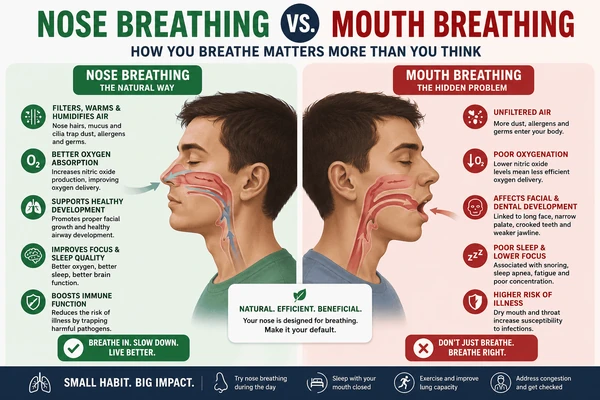
Nose Breathing vs.Mouth Breathing: Which Is Better for Your Health?
Breathing is something we do every day without thinking, but the way we breathe can greatly affect our health.
Although both the nose and mouth allow air to enter the lungs, they serve different purposes.The nose is the body's natural breathing passage, while the mouth is meant for eating, drinking, and talking.While mouth breathing may be necessary at times, doing it often can lead to several health issues.
Understanding the differences between nose breathing and mouth breathing can help improve your sleep, energy levels, oral health, and overall well-being.
What Is Nose Breathing?
Nose breathing is the natural process of inhaling and exhaling through the nose.
The nasal passages are designed to prepare the air before it reaches the lungs.They filter dust, bacteria, allergens, and other harmful particles while also warming and moistening the air.
Healthy nose breathing supports efficient oxygen exchange and helps the respiratory system work properly.
What Is Mouth Breathing?
Mouth breathing happens when someone breathes through the mouth instead of the nose.
It may occur during exercise, when the nose is blocked, or during illness.However, chronic mouth breathing, especially during sleep, can be a sign of an underlying issue, such as nasal blockage, allergies, enlarged tonsils, or sleep-disordered breathing.
Persistent mouth breathing should not be ignored because it can affect both children and adults.
Nose Breathing vs.
Mouth Breathing: Key Differences
| Nose Breathing | Mouth Breathing ---------------------------------------------
| Filters dust, | Allows unfiltered air
germs, and into the lungs
allergens
| Warms and. |Air remains cold and
humidifies dry
incoming air
| Produces nitric. | Produces very little
oxide that nitric oxide
improves oxygen.
delivery
| Keeps the mouth. | Causes dry mouth
moist and throat
| Supports better | Increases the
sleep quality risk of snoring and
poor sleep
| Promotes | Raises the risk of
healthy oral cavities and gum
health disease
| Helps | Often leads to ,
maintain proper. shallow rapid
breathing breathing
patterns
Benefits of Nose Breathing
1. Filters Harmful Particles
The nasal passages have tiny hairs and mucus that trap dust, pollen, bacteria, viruses, and pollutants before they reach the lungs.
This helps reduce the risk of respiratory infections.
2. Warms and Moistens the Air
Cold or dry air can irritate the lungs and airways.
The nose warms and moistens the air, making it more comfortable for the lungs to process.
3. Improves Oxygen Efficiency
The nose produces nitric oxide, a gas that helps widen blood vessels and improves oxygen absorption in the lungs.
This leads to better oxygen delivery throughout the body.
4. Supports Better Sleep
People who breathe through their noses often have quieter breathing, fewer sleep disturbances, and better overall sleep quality.
Proper nasal breathing may also reduce snoring.
5. Promotes Better Oral Health
Breathing through the nose keeps the mouth moist.
Saliva helps remove bacteria and protect the teeth and gums from decay and infection.
6. Encourages Calm, Deep Breathing
Nose breathing naturally slows the breathing rate and activates the body's relaxation response, helping reduce stress and anxiety.
7. Improves Exercise Performance
Many athletes use nasal breathing because it encourages controlled breathing, enhances endurance, and may improve oxygen use during moderate exercise.
Disadvantages of Mouth Breathing
Long-term mouth breathing can affect many parts of the body.
Dry Mouth
Without enough saliva, harmful bacteria multiply, increasing the risk of bad breath, cavities, and gum disease.
Poor Sleep Quality
Mouth breathing is often linked with snoring, restless sleep, daytime fatigue, and trouble concentrating.
Increased Risk of Respiratory Infections
Since the mouth doesn’t filter air effectively, more dust, allergens, and germs can enter the body.
Dental Problems
Children who breathe through their mouths may develop crooked teeth, narrow jaws, and bite problems.
Adults may also suffer from gum disease and tooth decay.
Lower Oxygen Efficiency
Mouth breathing bypasses the production of nitric oxide in the nasal passages, which makes oxygen delivery slightly less efficient.
Sore Throat
Sleeping with an open mouth often leads to a dry throat, hoarseness, and discomfort in the morning.
Common Causes of Mouth Breathing
Several conditions can make nose breathing difficult, including:
- Nasal congestion from colds
- Seasonal allergies
- Chronic sinus infections
- Deviated nasal septum
- Enlarged tonsils or adenoids
- Nasal polyps
- Sleep apnea
- Habitual breathing patterns developed over time
Signs You May Be a Mouth Breather
You may be breathing through your mouth if you often experience:
- Dry mouth upon waking
- Snoring
- Bad breath
- Cracked lips
- Frequent sore throat
- Restless sleep
- Daytime tiredness
- Difficulty concentrating
- Mouth open while sleeping
Effects of Mouth Breathing in Children
Children are especially vulnerable to the effects of chronic mouth breathing.
Over time, it may lead to:
- Poor facial development
- Narrow upper jaw
- Crowded or crooked teeth
- Speech difficulties
- Poor sleep quality
- Behavioral problems from lack of restful sleep
- Lower academic performance due to fatigue
Early evaluation and treatment can prevent many of these complications.
Can Mouth Breathing Be Corrected?
Yes.
The treatment depends on the underlying cause.
Possible treatment options include:
- Treating allergies
- Using saline nasal sprays
- Managing sinus infections
- Correcting a deviated septum if necessary
- Removing enlarged tonsils or adenoids when recommended
- Practicing breathing exercises to encourage nasal breathing
- Treating sleep apnea if present
If mouth breathing continues despite treatment, it is important to consult a healthcare professional for further evaluation.
Tips to Encourage Nose Breathing
Simple habits can help promote healthier breathing:
- Keep your nose clear with saline rinses if recommended.
- Stay well hydrated.
- Manage allergies promptly.
- Maintain good indoor air quality.
- Practice slow, deep nasal breathing throughout the day.
- Sleep on your side if you snore.
- Seek medical advice if nasal blockage lasts for more than a few weeks.
When Should You See a Doctor?
You should seek medical attention if you experience:
- Chronic mouth breathing
- Loud snoring
- Pauses in breathing during sleep
- Persistent nasal blockage
- Frequent sinus infections
- Severe daytime sleepiness
- Difficulty breathing through the nose
Early diagnosis can prevent complications and improve your quality of life.
Overview
Breathing through the nose is the body's natural and healthiest way to breathe. It filters, warms, and humidifies the air while improving oxygen delivery and supporting healthy sleep, oral health, and overall well-being. Although mouth breathing is sometimes necessary during intense exercise or temporary nasal congestion, relying on it regularly can increase the risk of dental problems, poor sleep, respiratory infections, and other health concerns.
If you notice that you or your child frequently breathe through the mouth, identifying and treating the underlying cause can make a significant difference. Healthy breathing habits may seem simple, but they play an important role in maintaining long-term health and improving daily quality of life.




Comments (0)
Leave a Reply
Log in to post a comment.