

 Jun 19, 2026
 4 min read
Understanding High Uric Acid(Hyperuricemia): From Early Symptoms to Effective Treatment
High Uric Acid (Hyperuricemia): Causes, Symptoms, Treatment, and Prevention
High uric acid, also referred to as hyperuricemia, is a health condition that happens when there is an excess amount of uric acid in the blood.
Uric acid is a waste substance created when the body breaks down a type of chemical called purines.These purines are naturally present in the body and can also be found in some foods.Usually, uric acid dissolves in the blood, travels through the kidneys, and is removed from the body through urine.However, when the body makes too much uric acid or the kidneys are unable to remove enough, the levels in the bloodstream can increase.
Over time, having high uric acid can result in painful conditions such as gout, kidney stones, and damage to the joints.
What Causes High Uric Acid?
There are several reasons that can lead to increased uric acid levels in the body:
1. Diet High in Purines
Foods that contain a lot of purines can raise uric acid levels.
These include:
- Red meat
- Organ meats (like liver and kidney)
- Shellfish
- Sardines and anchovies
- Sugary drinks and foods with high fructose content
2. Kidney Problems
If the kidneys are not working as they should, they may not be able to remove enough uric acid from the body.
3.Obesity
Being overweight can cause the body to produce more uric acid and also make it harder for the body to get rid of it.
4. Alcohol Consumption
Drinking alcohol, especially beer and spirits, can block the removal of uric acid and even increase its production.
5. Medical Conditions
Some health issues are linked to high uric acid, such as:
- High blood pressure
- Diabetes
- Metabolic syndrome
- Heart disease
- Kidney disease
6. Certain Medications
Some drugs can lead to higher levels of uric acid, including:
- Diuretics (commonly known as water pills)
- Low-dose aspirin
- Some immunosuppressive medicines
7. Genetics
Having a family history of gout or high uric acid levels can raise your risk of developing this condition.
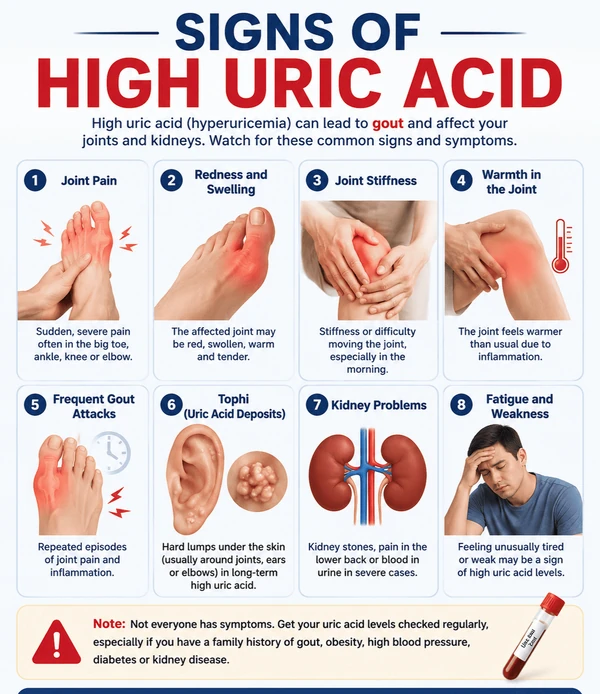
Symptoms of High Uric Acid
Many people with high uric acid may not experience any symptoms at first.
However, when uric acid crystals build up in joints or tissues, various symptoms may appear.
Common Symptoms Include:
Joint Pain
This pain is usually sudden and intense and can affect:
- The big toe
- Ankle
- Knee
- Foot
- Elbow
Redness and Swelling
The affected joints might become:
- Red
- Warm
- Sensitive
- Swollen
Joint Stiffness
It may become difficult to move the affected joint, particularly in the morning.
Recurrent Gout Attacks
If uric acid levels remain high, painful attacks can happen again and again.
Tophi Formation
Hard, uric acid crystal deposits may form under the skin, mostly near:
- Fingers
- Toes
- Elbows
- Ears
Pain while Urinating
Pain or a burning feeling when passing urine can occur if kidney stones or urinary tract irritation develop due to high levels of uric acid.
This may be accompanied by frequent urination, blood in the urine, or discomfort in the lower back or abdomen.
Kidney Stones
High uric acid can result in kidney stones, causing:
- Severe pain in the back or side
- Blood in the urine
- Frequent urination
- Nausea and vomiting
Fatigue
Some individuals may feel generally tired or weak.
How Is High Uric Acid Diagnosed?
Doctors may use a combination of the following tests to diagnose high uric acid:
- Blood tests to check uric acid levels
- Urine tests
- Joint fluid analysis
- Imaging tests such as ultrasound or X-rays
Normal uric acid levels are generally:
- Men: 3.4 to 7.0 mg/dL
- Women: 2.4 to 6.0 mg/dL
Treatment of High Uric Acid
1. Lifestyle Changes
Drink More Water
Drinking enough water helps the kidneys remove extra uric acid from the body.
Maintain a Healthy Weight
Losing weight gradually can help reduce uric acid levels and lower the chance of gout attacks.
Eat a Balanced Diet
Limit:
- Red meat
- Organ meats
- Sugary drinks
- Alcohol
Choose:
- Fruits and vegetables
- Whole grains
- Low-fat dairy products
- Nuts and seeds
Exercise Regularly
Physical activity can help keep the weight in check and improve overall health.
2. Medications
If diet and lifestyle changes alone are insufficient, a doctor may prescribe medication to help lower uric acid levels.
Uric Acid-Lowering Medications
- Allopurinol
- Febuxostat
These medicines help reduce the production of uric acid.
Medications for Gout Attacks
- Colchicine
- Nonsteroidal anti-inflammatory drugs (NSAIDs)
- Corticosteroids
These are used to relieve pain and inflammation during gout attacks.
Prevention Tips
- Drink enough water every day.
- Keep your weight in a healthy range.
- Limit alcohol consumption.
- Reduce intake of high-purine foods.
- Adequately Control your blood pressure and blood sugar levels.
- Follow medical advice and take any prescribed medicines regularly.
Conclusion:
High uric acid is a condition that can be managed with the right approach, but it can lead to serious problems like gout, kidney stones, and joint damage if not addressed.
Early detection, a healthy lifestyle, proper hydration, and appropriate medical treatment can help control uric acid levels and prevent complications.It is important to have regular checkups and blood tests, especially for those with a family history of gout or kidney disease.




Comments (0)
Leave a Reply
Log in to post a comment.