

 Feb 03, 2025
 3 min read
Yonaguni Monument: A Mysterious Underwater Structure
# Yonaguni Monument: A Mysterious Underwater Structure
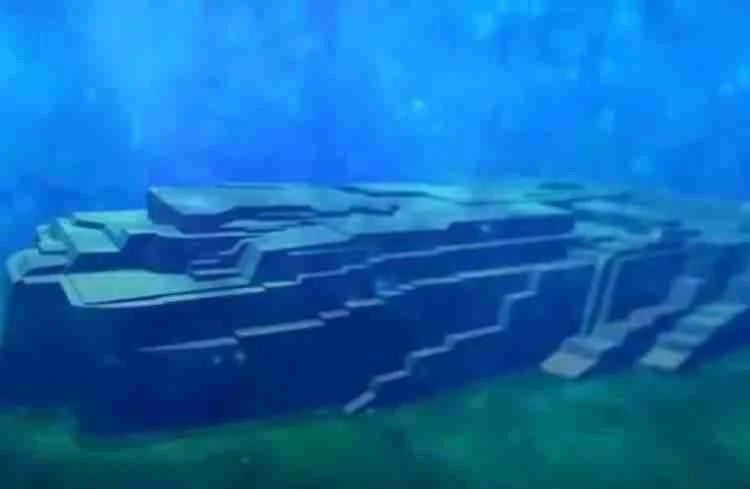
The Yonaguni Monument, also known as the Yonaguni Submarine Ruins, is an enigmatic underwater rock formation located off the coast of Yonaguni, a small island in the Ryukyu Archipelago, Japan. Discovered in 1987 by scuba diver and director of the Yonaguni-Cho Tourism Association, Kihachiro Aratake, this massive structure has sparked debates among scientists, historians, and archaeologists regarding its origins. Some believe it to be a natural geological formation, while others argue it could be the remains of an ancient civilization.
Geographical Location and Structure
The Yonaguni Monument lies about 25 meters underwater, southeast of Yonaguni Island. The structure is approximately 150 meters long, 50 meters wide, and 25 meters high. It consists of terraces, platforms, stair-like formations, and what appear to be pathways and pillars. The most striking feature is a pyramid-like structure resembling ancient stepped pyramids found in Mesoamerica.
Scientific Explanations
Many geologists argue that the Yonaguni Monument is a result of natural erosion and tectonic activity. Japan is located in a seismically active region, and its geological formations are often shaped by earthquakes, ocean currents, and wave erosion.
- Geological Composition: The monument is composed of sandstone and mudstone, which naturally fracture into rectilinear formations.
- Parallel Cuts and Right Angles: While the structure has many seemingly artificial cuts and angles, similar formations have been observed in other locations due to natural splitting and weathering processes.
- Marine Life Influence: The presence of marine organisms and coral growth further suggests that the formation has been underwater for thousands of years.
Dr. Masaaki Kimura, a marine geologist from the University of the Ryukyus, has extensively studied the monument. While he acknowledges that parts of the structure could be natural, he argues that human modification is also evident. He has identified what he claims are carved steps, walls, and possible inscriptions that indicate human intervention.
Ancient Civilization Hypothesis
Some researchers suggest that the Yonaguni Monument may be the remnants of an ancient lost civilization, possibly dating back to 10,000 BCE, making it one of the oldest known structures in human history. This theory is based on the following arguments:
- Similarities to Other Ancient Structures: The monument resembles ancient step pyramids such as those in Mesopotamia, Egypt, and Mesoamerica.
- Possible Inscriptions and Symbols: Some divers have reported markings on the structure that appear to be carvings or petroglyphs.
- Alignment with Astronomical Features: Certain formations within the monument align with solstices and cardinal directions, which suggests intentional human design.
Connections to Ancient Myths and Texts
Japanese and Okinawan folklore speak of lost lands and ancient submerged cities. Some theories suggest that the Yonaguni Monument could be linked to Mu, a mythical sunken continent believed to have existed in the Pacific Ocean.
- Mu and Lemuria Legends: Similar to Atlantis, Mu is described in some esoteric texts as an advanced civilization that was destroyed by a catastrophe.
- Ryukyuan Legends: Stories of a sunken city or civilization beneath the sea have been passed down through local folklore.
Debates and Controversies
The controversy over Yonaguni remains unresolved due to the following reasons:
- Lack of Artifacts: No definitive artifacts, tools, or pottery have been found that would conclusively prove human involvement.
- Scientific Disagreements: While Dr. Kimura strongly supports the artificial theory, most mainstream geologists reject it, stating the formations are natural.
- Diving Limitations: Due to the monument’s underwater location, detailed excavations and studies are difficult.
Conclusion
The Yonaguni Monument remains a fascinating mystery that continues to intrigue explorers and researchers. Whether it is a natural geological wonder or a lost civilization’s remnant, it is an essential site for underwater archaeology. Future research and advancements in underwater exploration may help uncover more about this enigmatic structure.
References
- Kimura, Masaaki. Submarine Ruins of Yonaguni: The Lost Civilization of Japan, Marine Geology Research Journal, 2006.
- Schoch, Robert M. Voices of the Rocks: A Scientist Looks at Catastrophes and Ancient Civilizations, 1999.
- Okinawan Folklore Archives. Legends of the Ryukyu Islands, 2015.



Comments (0)
Leave a Reply
Log in to post a comment.